


How to choose a caliper?
When buying a measuring tool, it is worth remembering that you are not just buying a tool, but making an investment in your work. Measurement accuracy ultimately affects its result, an incorrectly measured part can cost huge financial and reputational losses. You should not save when choosing a tool, because you do not get it for one day. Use a calibrated and verified tool - this is a guarantee of reliability and accuracy. To date, there are many different tools for measuring certain parts, with varying complexity, accuracy, availability, etc.
The most popular include a caliper, also known as a columbine, a simple and reliable tool with a huge amount of functionality.
Vernier caliper is a universal measuring tool designed to measure geometric dimensions with an accuracy of 1 micron. Allows you to measure internal and external dimensions, as well as depths.
In order to choose the right caliper, you need to know what you plan to measure and in what conditions to use the caliper.
Many factors go into choosing a caliper.
The main one, probably, is the price, the principle also applies to the caliper, the more accurate the measurement, the more expensive it is, the more accurate the measurement results you want to get, the more expensive the caliper will be. The price of a caliper depends on such factors as length, accuracy, reading device. Let's take a closer look at these types of calipers. The length can be very different from 125 mm - a classic columbine to 5000 mm. Accuracy, today there are vernier calipers with a division value of 0.001 mm and an error of 0.005, which approaches the accuracy of a micrometer. Reader, the classic vernier caliper has a vernier reader. There are pointer calipers with an hour-type reading device, with an arrow often with a division value of 0.02. The third option can be a digital block, often with a division value of 0.01, or 0.001. These three types of readers are used in all calipers. Each of them has its own advantages and disadvantages. Before buying a caliper, you should decide what measurements you will take and with what accuracy. It is also worth noting that calipers have their own chips and additional devices, such as carbide tips, or a device for controlling the pressing force, in order to ensure a minimum error.
Caliper design
On the one hand, the design of the caliper is simple and effective and has not changed for centuries, a truly unique measuring device. The caliper consists of a fixed rod with a sponge at the bottom and at the top for internal and external measurements, on which a millimeter scale is applied and the second part of the movable one with similar jaws, which, when connected, adjoin each other. On the movable part of the caliper there is a second scale, which is called the vernier scale, and it is with the help of it that the measurement results are taken with a greater accuracy of up to 0.02 mm. Many calipers are also equipped with a device for measuring depth. The main feature of the caliper is its measuring parts, the surfaces of which must be plane-parallel to each other, and not translucent when connected to each other. To fix the results, each caliper has a locking screw on the end that easily presses the top bar and allows you to hold the measurement results.
Consider a number of existing calipers and their functionality:
Calipers are available in various lengths 125mm, 150mm, 250mm, 300mm, 500m, 1000mm, etc. accuracy with a division value of 0.001mm 0.02 and 0.05, 0.1 mm.
The ShTs- I series is the simplest and most popular caliper in the popular name "columbic" in honor of the Columbus company, which supplied calipers under Lend Lease.
This type of caliper has jaws for internal and external measurements, as well as a depth gauge.
Measuring range from 125 mm to 300 mm, division value 0.1 mm, 0.05 mm, and 0.02 mm.
When choosing a mechanical vernier caliper, it is necessary to check that the jaws are even when the jaws touch, there are no gaps, and that the vernier scale is set to zero, the lines of the vernier scale are clear and clearly displayed at 0. Pay attention to the presence of a passport and a certificate of calibration.
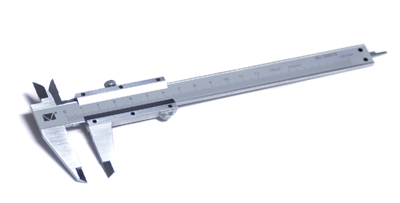
BUY Caliper ШЦ-I PRICE FROM 710 UAH
Series ШЦЦ- I (designation ШЦЦ applies to all types of digital calipers).
Digital calipers quickly broke into the world of measuring technology and rightfully gained popularity among users, ease of operation and their reliability.
Range of measurement of the ShTsTs-I series from 150 mm to 300 mm. A digital caliper has several advantages over a mechanical caliper. The main advantage is accuracy, the discreteness of digital calipers is 0.01 mm, which, even with an error, makes measurements with a digital caliper much more accurate than a mechanical one. Also the possibility of zeroing at any point and, if necessary, switching between the inch and metric measuring system.
When choosing a digital caliper, you should pay attention to the location of the jaws when they are brought together on the digital display should be zero, and the numbers should not jump when the locking screw is clamped.
The cost of high-quality digital calipers is often much higher than that of mechanical ones, but their advantages are undeniable, fast results and ease of operation. Cheap calipers do not guarantee the accuracy and objectivity of the readings.
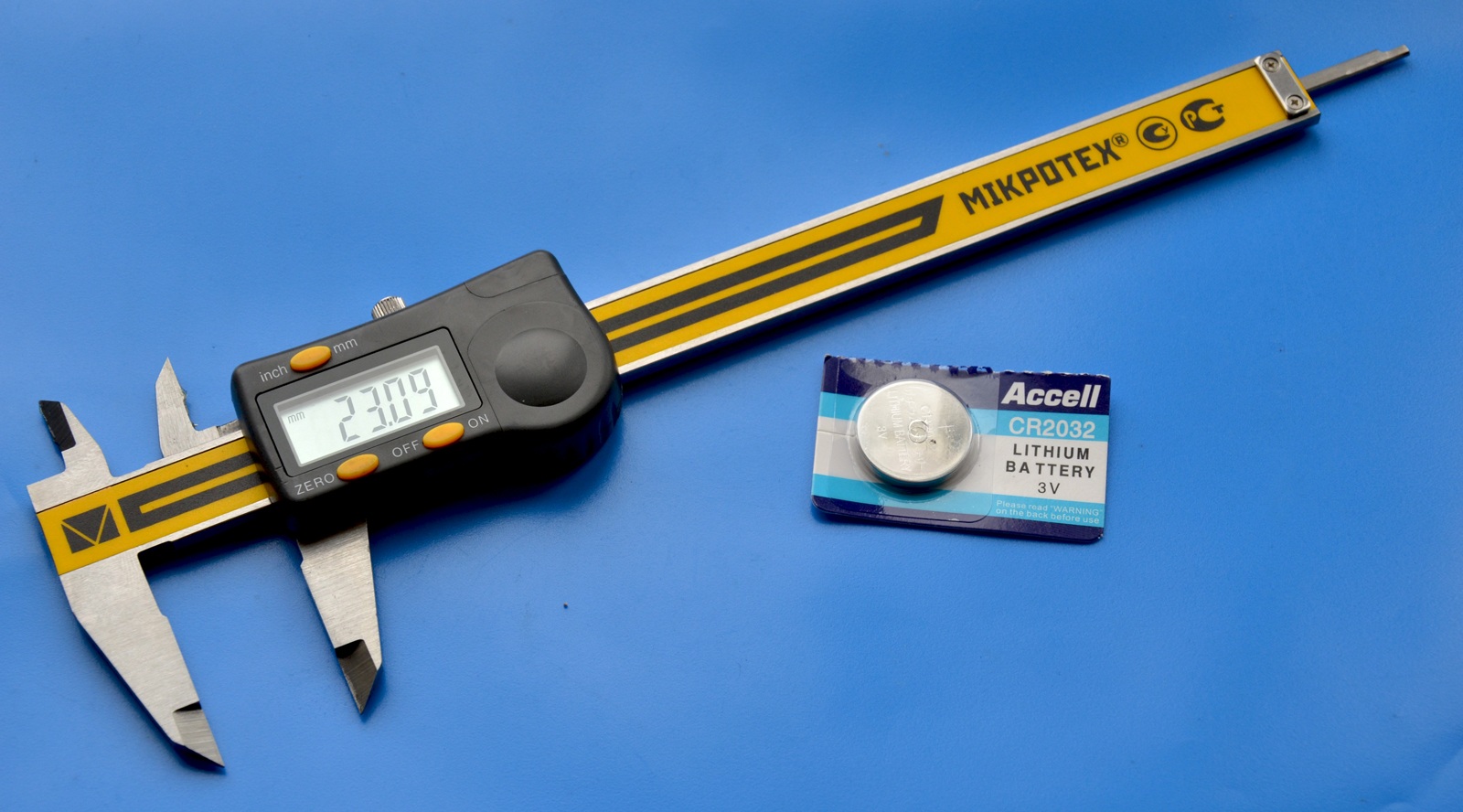
BUY digital caliper ШШЦ-I PRICE FROM 1228 UAH
Swiss digital calipers from SYLVAC
SYLVAC digital calipers are produced by the company of the same name in Switzerland, have been on the market for a long time and have an undisputed leading position in the European market. Own electronics guarantee measurement accuracy and smooth running. Also, all calipers have a degree of dust and moisture protection IP67, which makes it possible to work in swampy places. Swiss quality guaranteed accurate measurement results
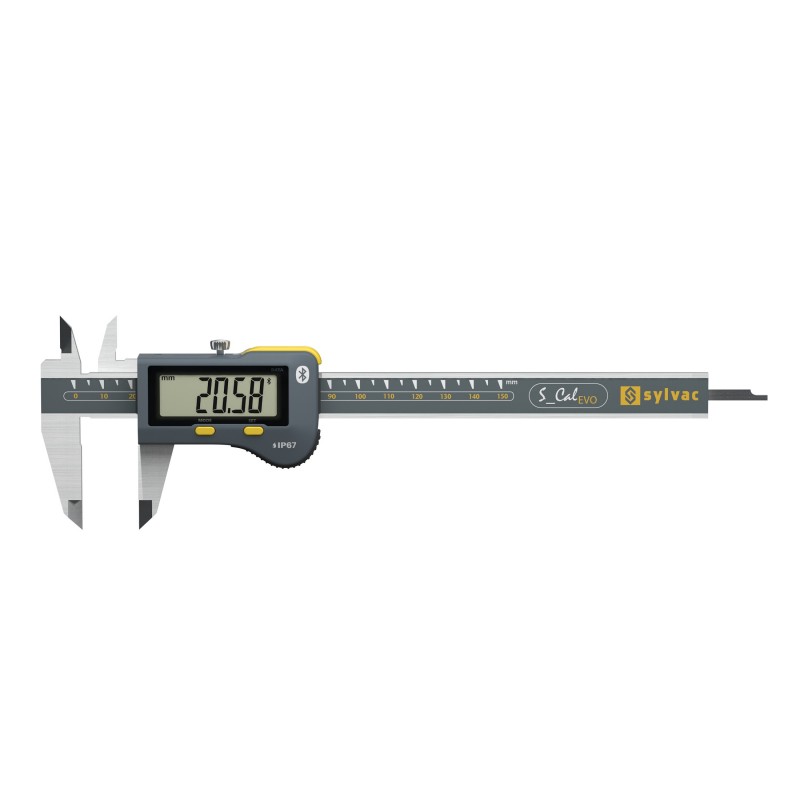
BUY digital caliper SYLVAC ШШЦ-I PRICE FROM 4185.60
These calipers are equipped with a circular scale made in the form of a rotary indicator device, with a division value of 0.02. When choosing this type of caliper, you should pay attention to the fact that the arrow would be at zero when the jaws are closed. This type of caliper is convenient for frequent comparative measurements, the indicator pointer is convenient for quick reading of the results and eliminates the possibility of jumps, as is possible, for example, in a digital caliper. When manufacturing the same sizes, it is very convenient to read the results.
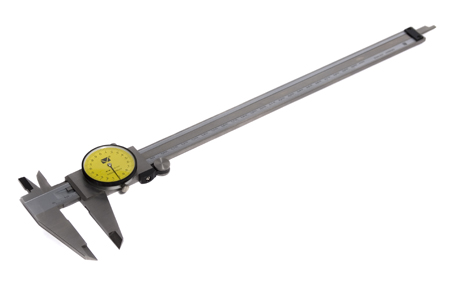
BUY caliper ShCK-I PRICE FROM 1497 UAH
This series is designed to measure external and internal dimensions, the division value is mainly 0.02 and 0.05 with a range of 0-250 mm and 0-300 mm
This type of caliper is also designed for marking work and can be equipped with carbide tips for this type of measurement and marking. Without special sponges, it is possible to make markings, but it should be borne in mind that over time the sponges will be erased and will have a round shape, this malfunction will certainly be repaired, but after repair, the tolerances of the caliper will change greatly. It is possible to install carbide tips on the caliper as shown in the photo, which prolongs the life of the caliper for a long time
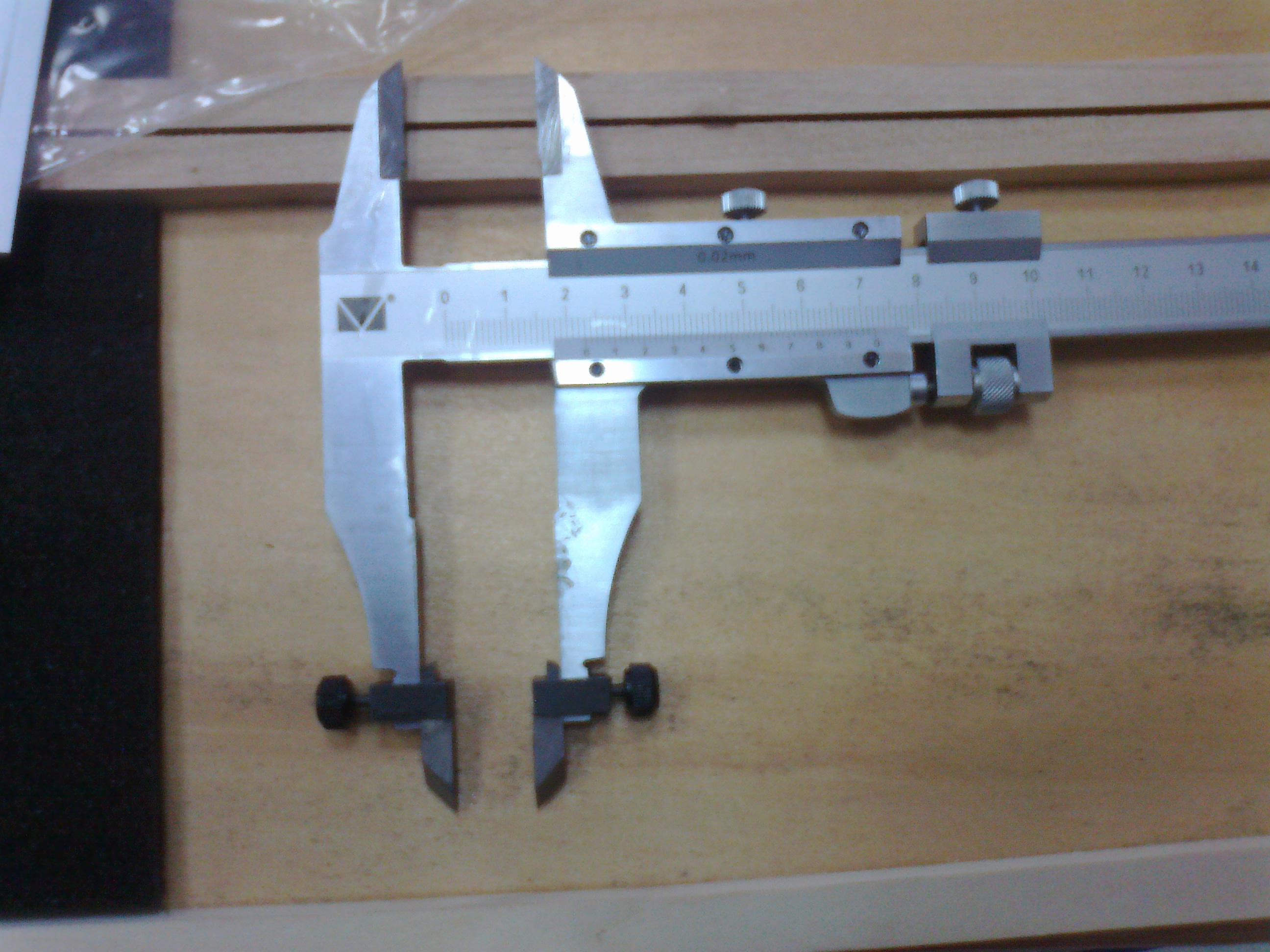
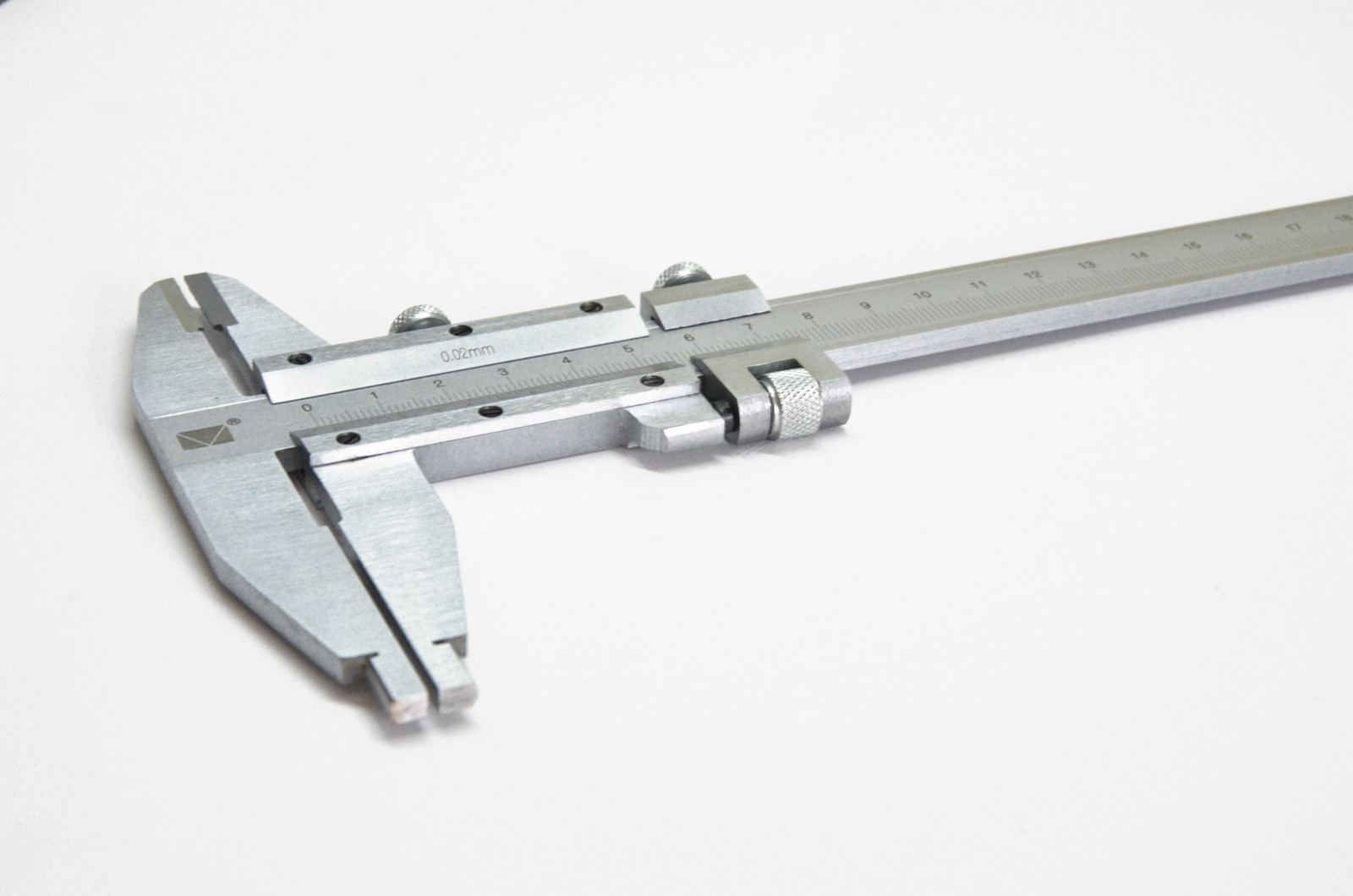
BUY caliper ШЦ-II PRICE FROM 1420 UAH
Series ShTs- III and ShTsTs- III
Usually calipers of greater length from 450 mm to 5,000 are determined by the shts-III series, this type of caliper does not have a depth gauge and the jaws are directed only downwards, the length of the jaws also differs, it is possible to order a length from 100 mm to 300 mm, this type of caliper is needed to measure large parts with high precision, there is a series of digital calipers with a division price of 0.01mm as well as mechanical ones with a division price of 0.02mm. The length of the jaws allows you to measure almost all parts of a wide range
Also, the dynamics of the production of calipers does not stand still today, a huge number of calipers designed for special measurements, pipe calipers, for brake discs, internal and external measurements, for measuring tire tread depth, have been developed.
Pipe caliper ШЦЦТ .
This type of caliper is used to measure pipes, this caliper does not have classic jaws, one of the jaws has the shape of a cylinder to fit well on the rounded part of the pipe, the range of such calipers is from 0 to 300 mm all calipers of this series have a digital reading device with a division value 0.01
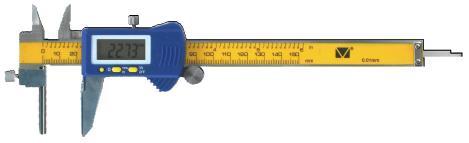
SCCV
Caliper for internal measurements
Digital caliper for measuring internal holes.
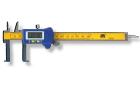
SCCN
Caliper for external measurements
digital caliper for measuring outside holes.
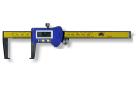
SHCU
Caliper universal
Digital universal caliper, has a number of special nozzles for measuring pipe walls, center-to-center distances, internal and external measurements. A very handy caliper in terms of hard-to-reach measurement solutions.
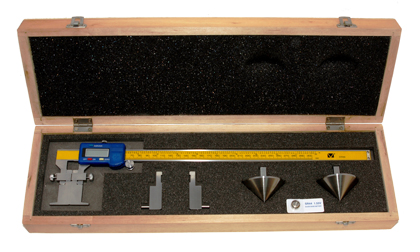
SCCD
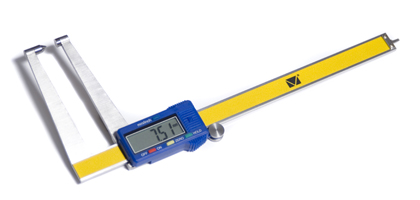
Caliper for brake discs
Calipers of this type can be used not only to measure the thickness of brake discs, but also to measure parts with protrusions, an indispensable tool for working at service stations.
SCCP
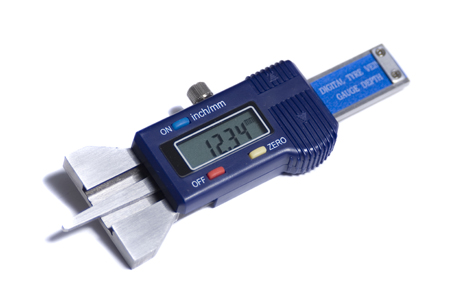
Protective caliper
- a special caliper for measuring the tread depth of tires, a very convenient and reliable tool for fast results.
SCCM
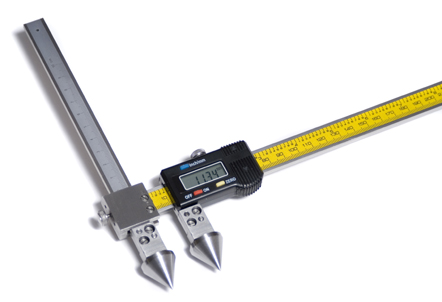
Caliper for measuring center-to-center distances
This caliper is designed to measure center-to-center distances, has a special non-removable nozzle, such a nozzle comes with a universal caliper.
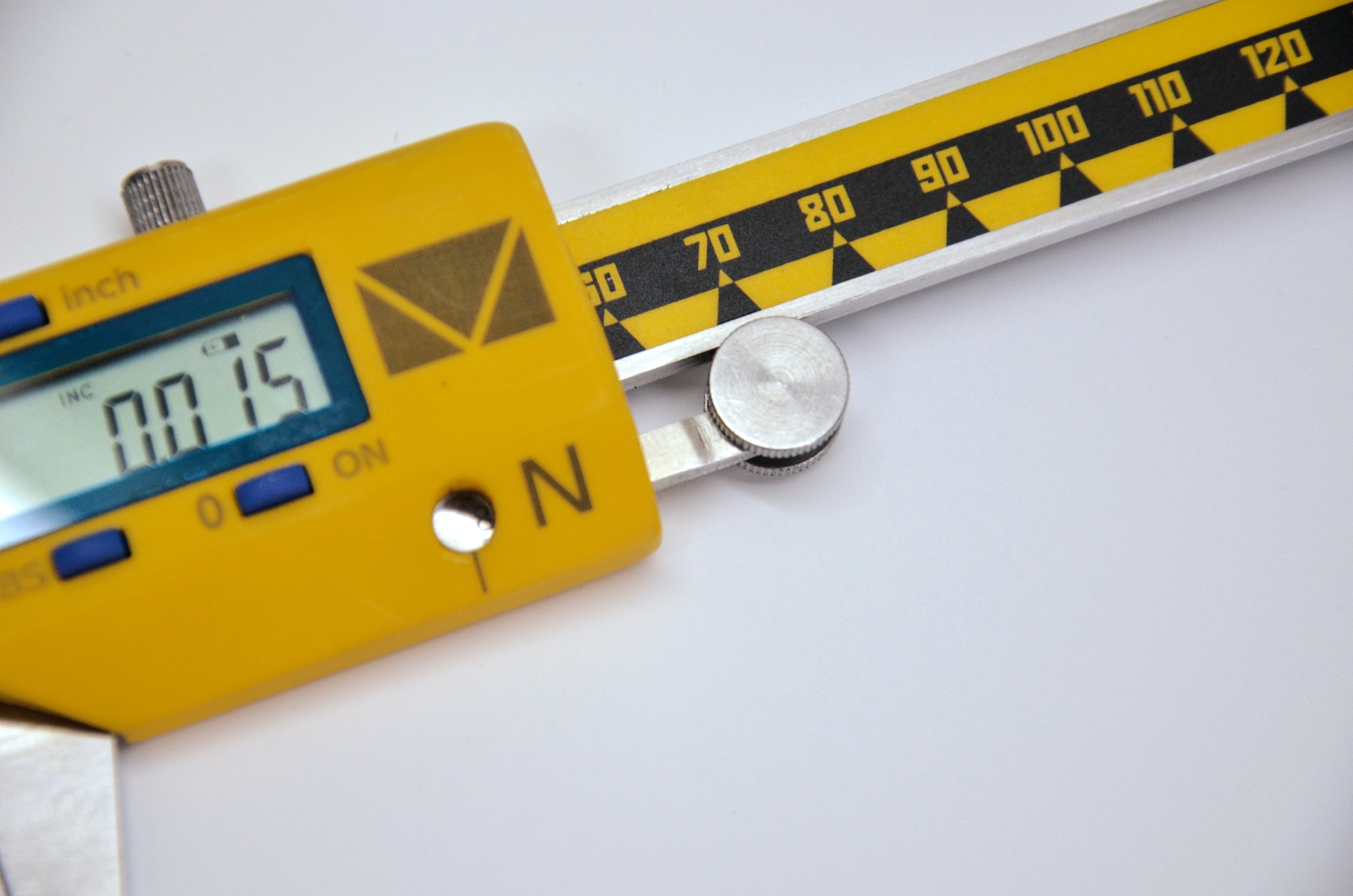
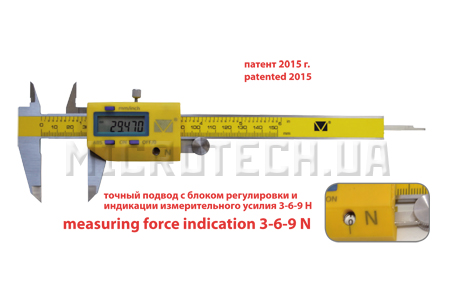
New precision digital calipers, this is the most modern development of Microtech, these calipers use the ability to control and adjust the measuring force, as well as a high readout resolution of 5 microns.
Caliper for soft materials with force control.
The main feature of these calipers is the ability to control the pressing force from 1 to 3 Newtons, which makes it possible to avoid punching the measured material.
ShTsTs-I precision caliper with a large force range from 9 to 15N and a division value of 5 microns.
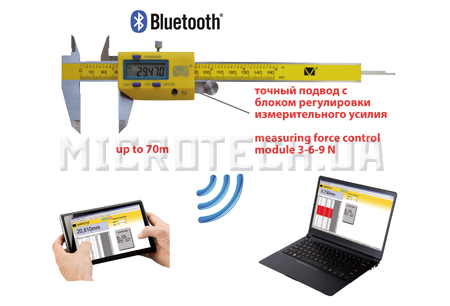
Also very interesting calipers with wireless data transmission, this direction of measurement is convenient for creating databases for product testing, production release or quality control department. The principle of operation is very simple, the measurement results are displayed in a special program at a distance of up to 100 meters, it is also possible to control from a tablet or mobile phone. The operator can see the measurement results from many devices at such a distance and control the quality in this way.
 Download PDF document (10 Mb)